
Memory lane isn’t always linear – at my age, sometimes I feel like I’m walking uphill when it comes to remembering precise moments, names and dates from my past. Photography has taken on an even more central role, as I delve into my archives, photo albums and book shelves on the lookout for stories to share.
This blog post arises from the pages of a book I cherish deeply: the first edition of Lee Friedlander’s “Photographs” published by Haywire Press, New York, in 1978 .
In 1979 I was lucky enough to be a part of Venezia ’79 – La Fotografia, a monumental, city-wide photography festival held from June to September in Venice, featuring 26 exhibitions, 46 workshops, and numerous seminars with 3,500 photos from 500 artists. It was organized by the International Center of Photography (ICP) with financing from UNESCO.
I had been called to act as an interpreter for their weekly workshops, namely the ones led by legendary photographers Duane Michals, Marie Cosindas and Lee Friedlander. I had just moved back to Italy after living in New York, but the guys from ICP knew me and confided in my linguistic abilities, since I speak both Italian and English fluently. Not many people had this skill in Italy at the time. Needless to say, I was completely out of my league, but I accepted anyway, eager to meet the greats.
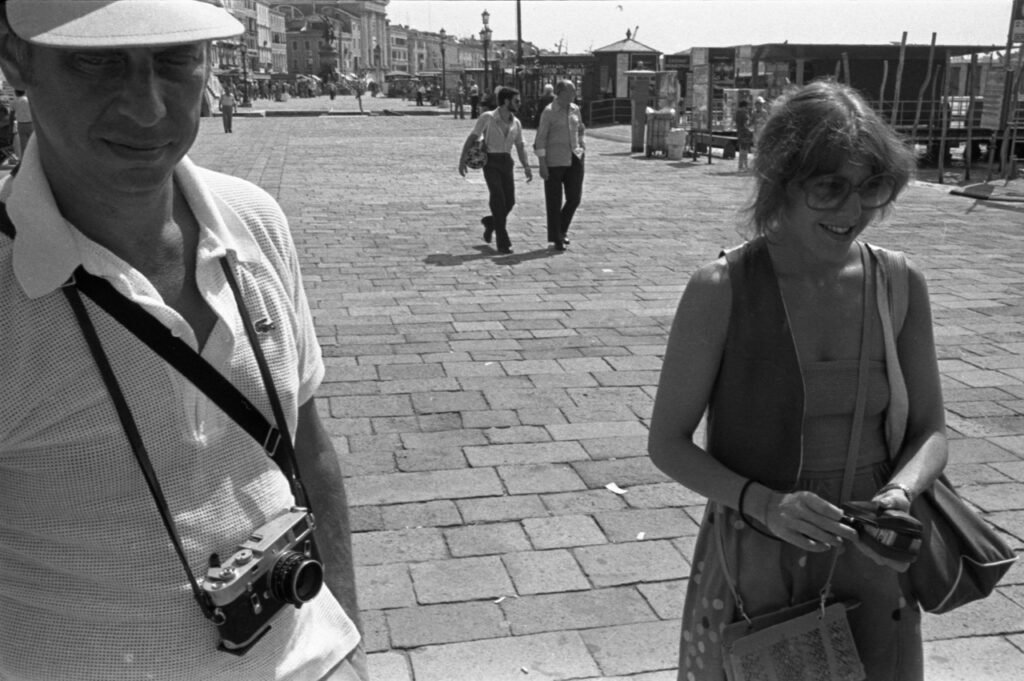
I lucked out with Friedlander because he was a man of few words. When questioned, he would reply in short statements or mutter “I don’t have much to say about this”. He was a restless soul. The true reason behind his visit to Venice was quite clear: taking pictures. I ended up spending more time in the company of his wife, Maria De Paoli, who was very friendly and warm; she wanted to practice her Italian with me.
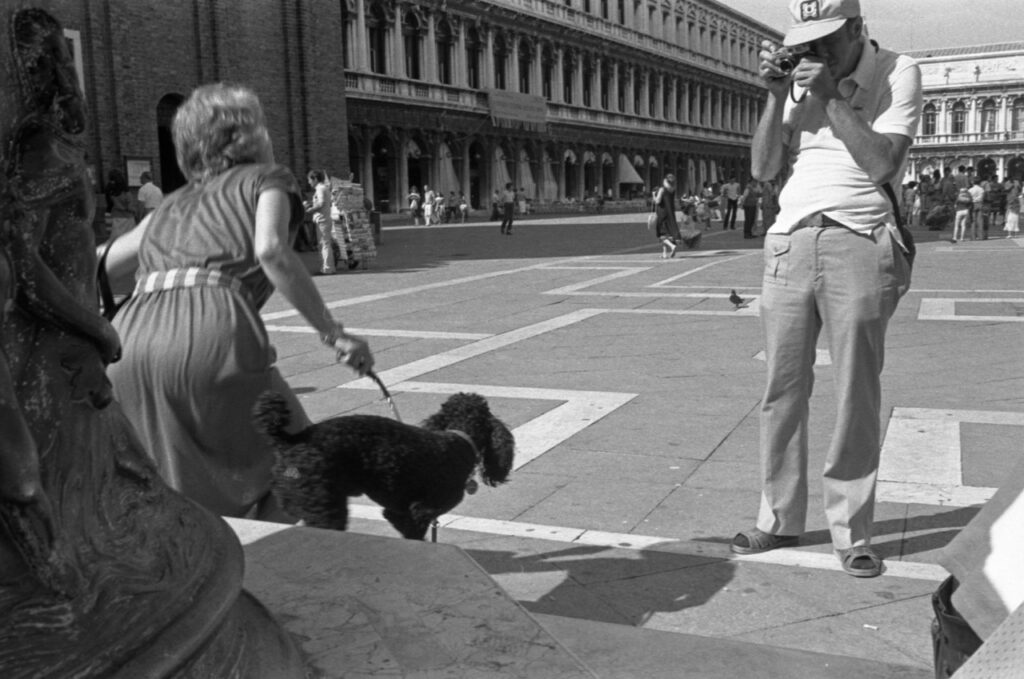
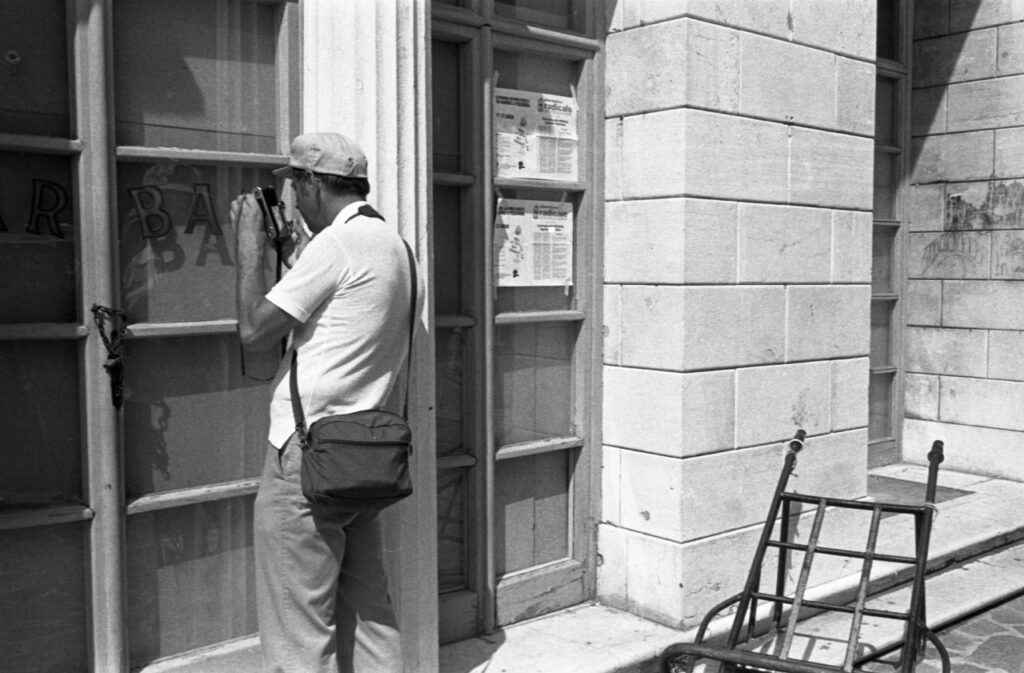
There was one instance in which I was not as fortunate. One evening, they held a conference in front of Palazzo Fortuny with photographer George Tice, who was a very loquacious type, and asked me to translate live.
In front of all those people, overwhelmed by George’s verbal audacity, I completely froze and was not able to retrieve my train of thought. It was terrible, and the audience was growing increasingly nervous. Mercifully, there was a young Edward Rozzo in the crowd—another New Yorker photographer who had moved to Milan—who felt compelled to take my place on stage. I was so grateful, and we became good friends after that.
Venezia ’79 – La Fotografia was an incredible event, truly one of a kind… as a matter of fact, it was the first and the last of its kind. I met so many people during those days—Guido Guidi, for example, and his then student Paolo Costantini…
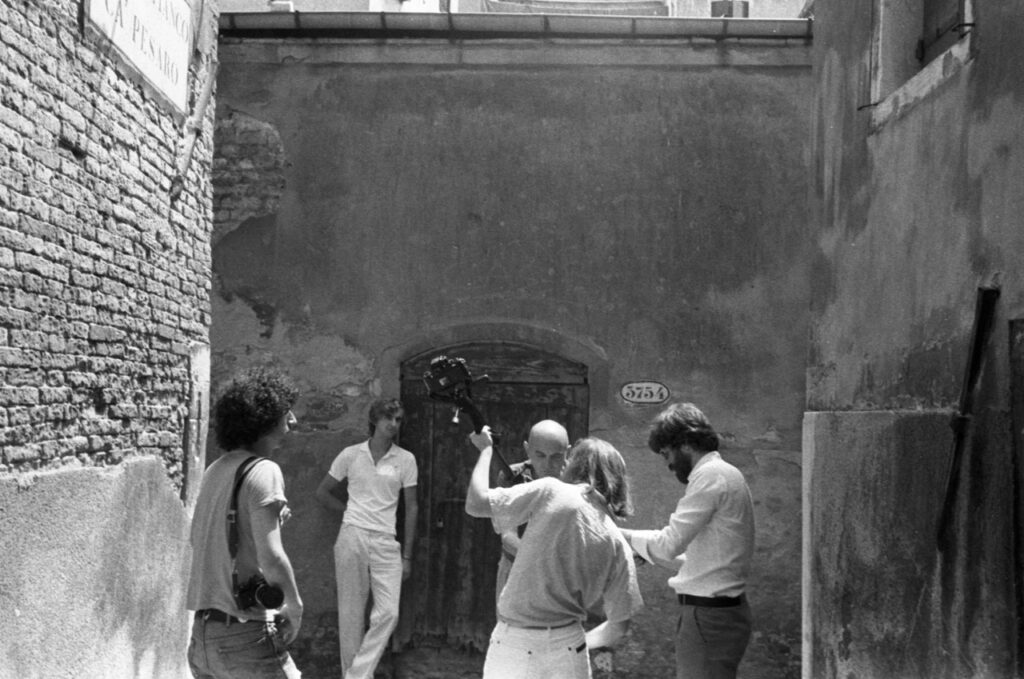
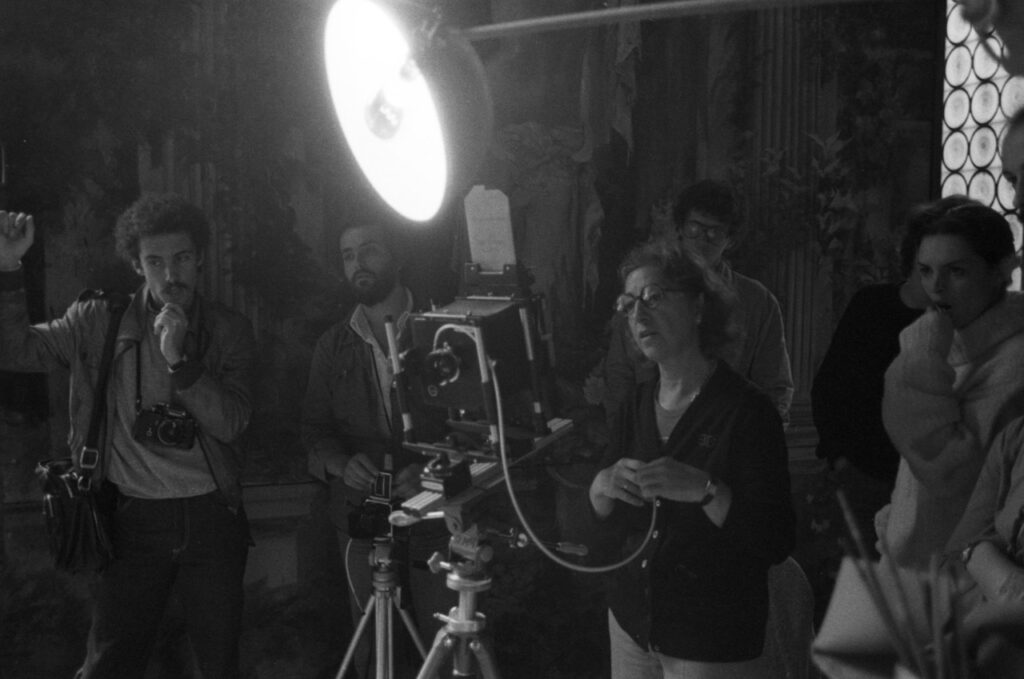
It was an unprecedented gathering of photographers and a pivotal occasion for networking and dialogue. At the time, I was not then aware of how impactful this event would have been in furthering my academic career and how the workshop format would become central to the inception of Studio Marangoni ten years later.
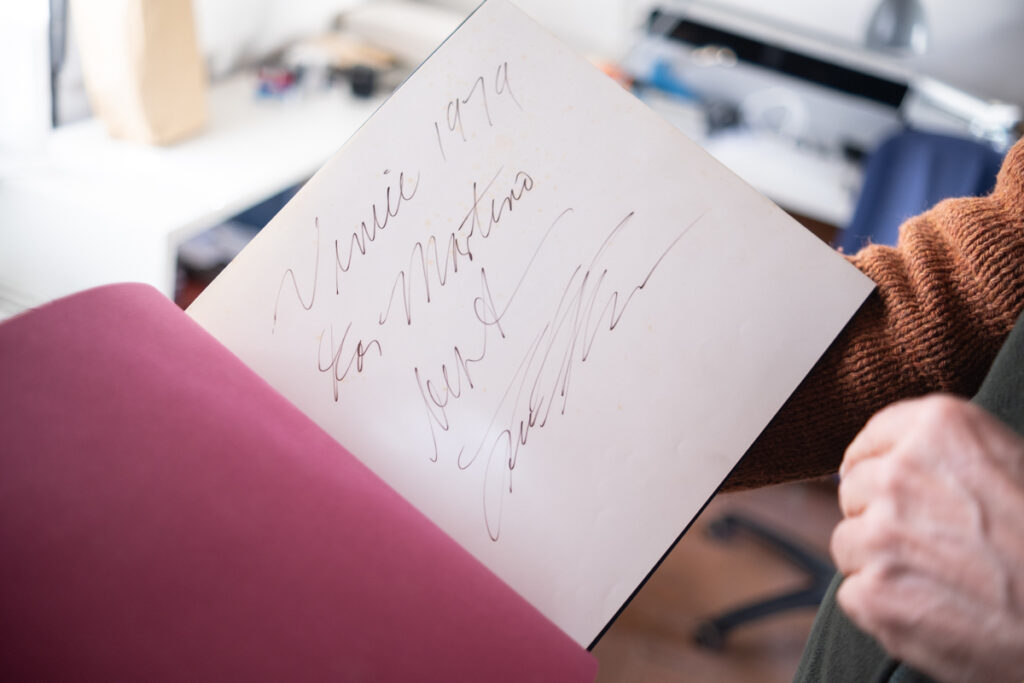
Friedlander had brought a few copies of his book and he gave me a signed one, despite my poor performance as a translator. These images still have a great hold on me; the observation of humans in the public space resonates with my practice deeply.
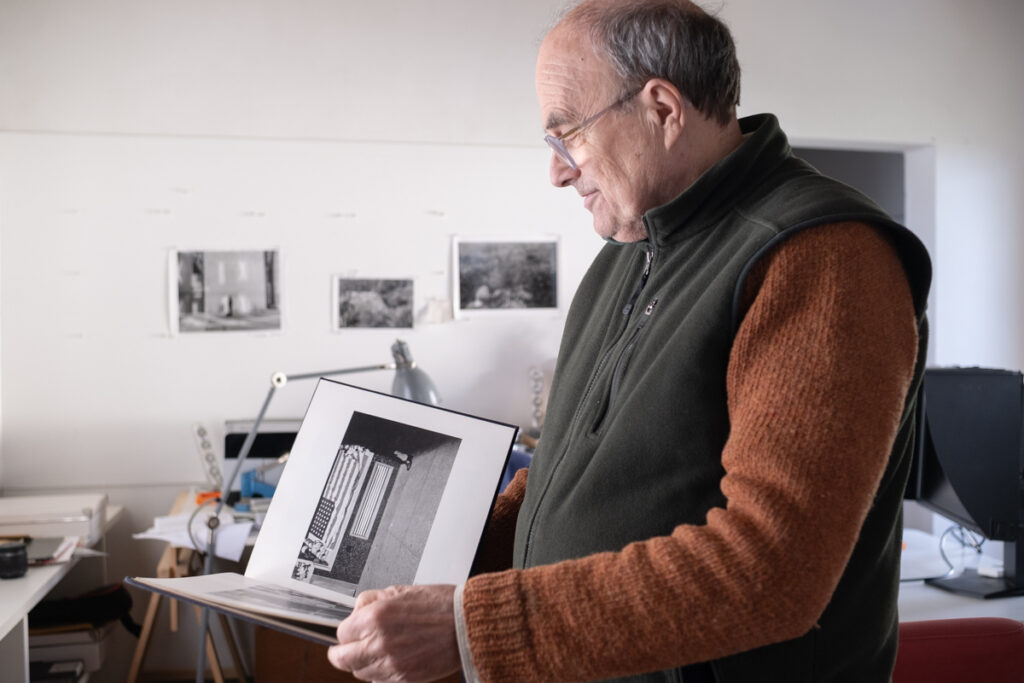
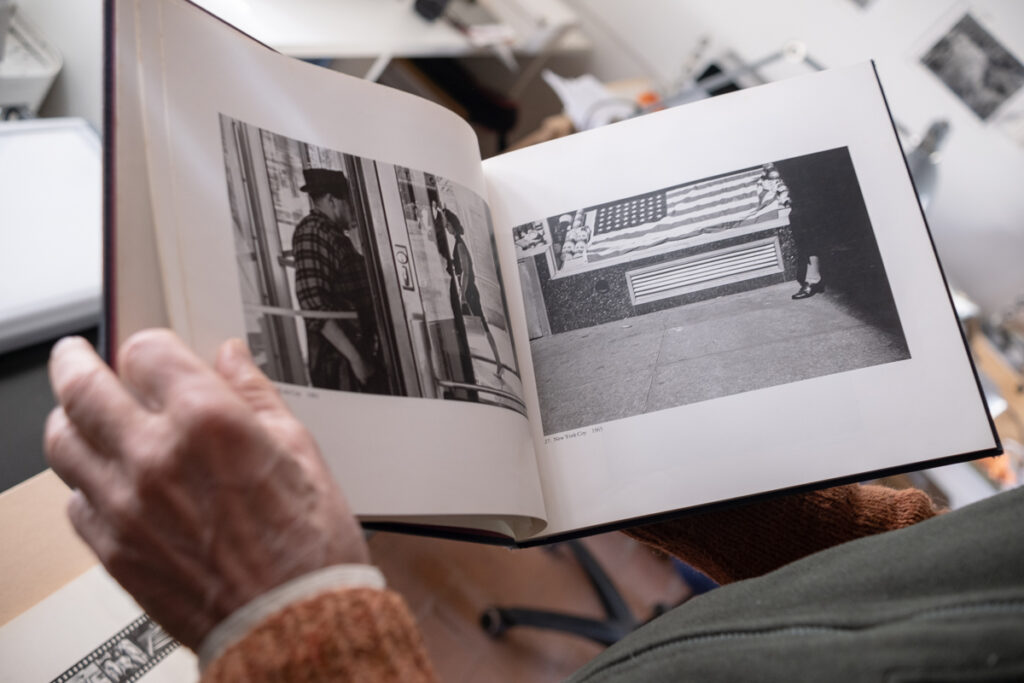
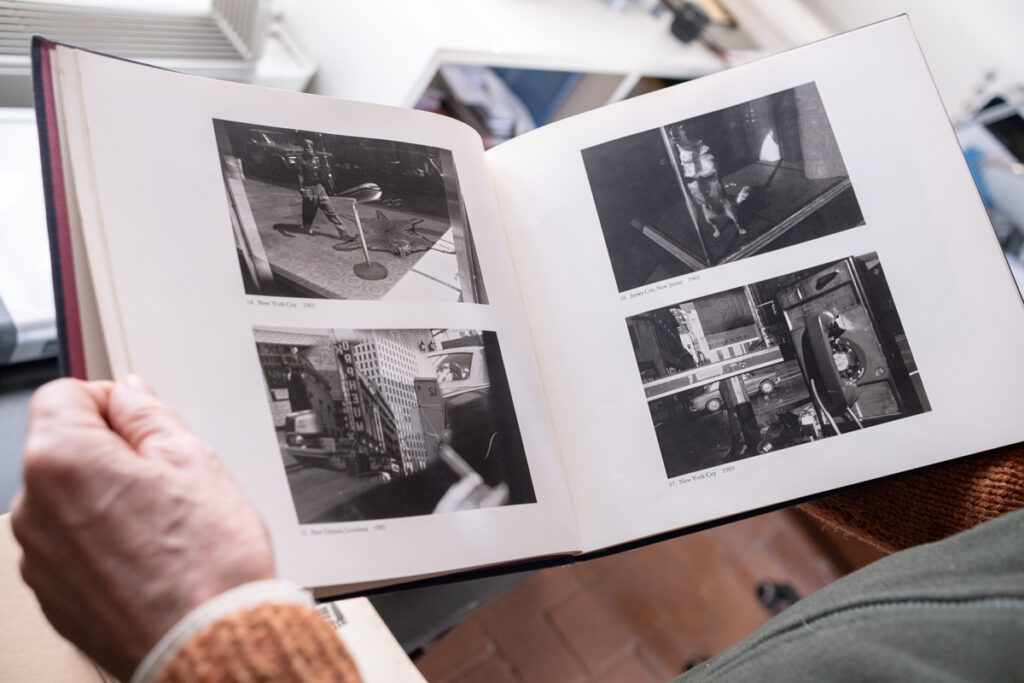
Alongside Gary Winogrand and Robert Frank, I still see him as one of the pillars of photography, and he influenced me greatly.
Behind the scenes photos by Michelle Davis